

Project confidentiality: This case study is intentionally anonymous. Facility names, locations, door numbers, report identifiers, and other identifying details have been removed.
A newly constructed South Florida healthcare facility engaged BC Fire Door to inspect, document, repair, and verify its fire and smoke door assemblies. Although the building was new, more than 100 openings required corrective work. BC Fire Door moved the identified repair items through a coordinated new hospital fire door remediation program in approximately two months.
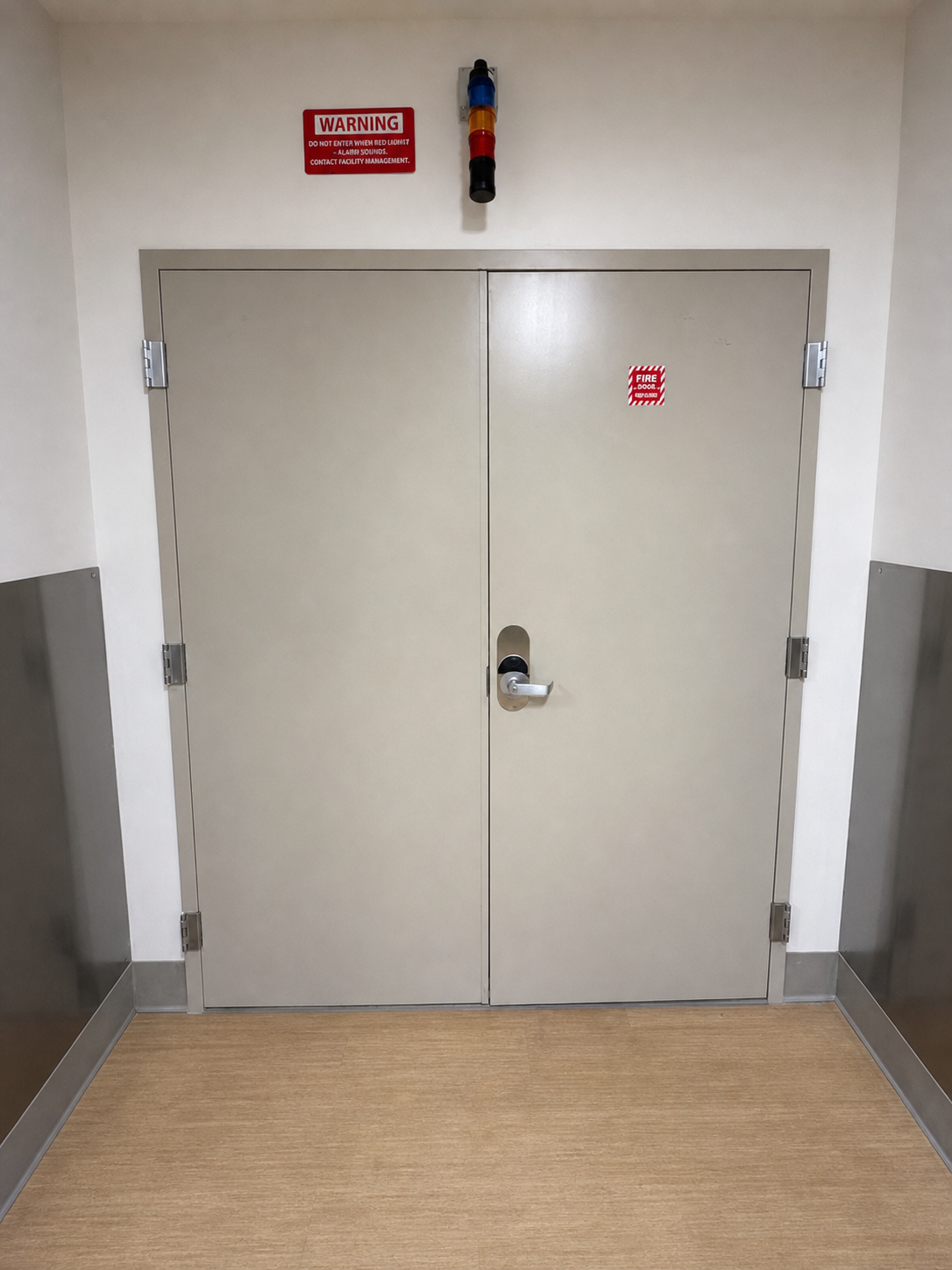
New Hospital Fire Door Remediation at a Glance
- Facility: Newly constructed, multi-story healthcare facility in South Florida
- Scope: Fire and smoke door inspection, deficiency documentation, repairs, and post-repair verification
- Findings: More than 100 openings required corrective action
- Schedule: Identified repair items were addressed and retested within approximately two months
- Deliverable: Door-level records supporting maintenance planning and life-safety closeout
The Challenge: New Construction Does Not Guarantee a Passing Door Assembly
Fire and smoke doors are complete systems. The door, frame, hinges, closer, latch, coordinator, gasketing, glazing, labels, protection plates, clearances, and field modifications must work together. A new door can still have installation, adjustment, product-selection, or coordination issues that keep the assembly from operating as intended.
At this facility, deficiencies appeared across multiple occupied and support areas. The work had to be organized around clinical operations while maintaining a clear record of the original finding, corrective action, and verification status for every affected opening.
Common Deficiencies Documented
The inspection identified a range of conditions commonly found during healthcare construction closeout, including:
- Perimeter, meeting-edge, and bottom-clearance concerns
- Doors that did not reliably self-close or positively latch
- Closer, coordinator, flush-bolt, and fire-pin adjustments
- Missing, damaged, or incomplete smoke seals
- Protection plates or other components requiring rated products
- Label, frame, and field-labeling issues
- Fire-exit hardware and related operational concerns
- Open holes, penetrations, or field modifications requiring an approved correction
BC Fire Door’s Four-Step Process
1. Inspect and Build a Door-Level Record
Each opening was reviewed as a complete assembly. Findings were tied to individual openings so the project team could see what failed, why it failed, and what action was required.
2. Organize Findings by Repair Type and Priority
Deficiencies were grouped into adjustment, hardware, gasketing, clearance, labeling, and specialty-material categories. This allowed labor and materials to be scheduled efficiently instead of treating every opening as a separate emergency.
3. Complete Coordinated Corrective Work
BC Fire Door worked through the repair list in an organized sequence, coordinating access to active areas and documenting the corrective work. Repairs were completed using methods and components appropriate to the rated assembly.
4. Retest and Document Completion
After corrective work, affected openings were retested for closing, latching, clearance, and other applicable inspection points. The updated record gave the facility a practical audit trail instead of a simple verbal confirmation.
Outcome: More Than 100 Openings Addressed in Approximately Two Months
The project moved more than 100 initially deficient fire and smoke door openings through documented corrective work and post-repair verification within approximately two months. The result was an organized closeout record that the facility team could use for maintenance, survey preparation, and future annual inspections.
This outcome does not mean that every future condition is guaranteed compliant. Fire door assemblies remain active building assets and must be maintained, inspected, and documented over time. It does show how a structured inspection-to-repair workflow can turn a large deficiency list into a controlled, verifiable closeout process.
Why Independent Fire Door Inspection Matters on New Healthcare Projects
New construction involves multiple trades, substitutions, hardware adjustments, commissioning activities, and final punch-list work. Small changes can affect a rated opening even when the door and frame were originally specified correctly. Independent inspection before final turnover helps the owner identify these issues while project teams and documentation are still available.
For healthcare facilities, the strongest process connects healthcare fire door inspection, corrective work, reinspection, and organized reporting from the beginning.
Frequently Asked Questions
Can fire doors in a new hospital fail inspection?
Yes. New assemblies can have clearance, hardware, closing, latching, gasketing, labeling, glazing, or field-modification deficiencies. Inspection evaluates the complete installed opening, not its age.
What happens after fire door deficiencies are found?
The findings should be documented by opening, categorized, corrected using appropriate methods and listed components, and then retested. The facility should retain both the original finding and the completed corrective-action record.
How long can a hospital fire door remediation project take?
The schedule depends on the number and type of findings, access restrictions, and material availability. With organized planning, field-correctable items can often be resolved quickly; specialty listed materials may require additional lead time.
Who should inspect and repair healthcare fire doors?
Inspections should be performed by qualified personnel with knowledge of fire door assemblies and the applicable standard. Corrective work should be completed by technicians who understand rated openings, approved repair methods, and documentation requirements.
Healthcare Industry Engagement
BC Fire Door participates in the Florida Healthcare Engineering Association (FHEA) as a Supporting Member, helping us stay engaged with Florida’s healthcare facilities community and continuing education. FHEA membership does not constitute an endorsement of BC Fire Door’s products or services.
Related Healthcare Fire Door Case Study
For an example of a project that remains open while final listed materials are pending, read our Healthcare Fire Door Repair Planning Case Study.
Plan a Healthcare Fire Door Inspection and Remediation Program
BC Fire Door provides fire door inspection services, deficiency documentation, corrective-work support, and reinspection for healthcare and commercial facilities across Florida and the Southeast.
Contact BC Fire Door to discuss an inspection, construction closeout, or fire door remediation program.