

Project confidentiality and status: This case study is intentionally anonymous. Facility names, locations, door numbers, report identifiers, and other identifying details have been removed. The project remains open while final listed, manufacturer-specific materials are obtained; this page does not claim that the facility is 100% compliant.
A new multi-story South Florida medical facility engaged BC Fire Door to inspect fire and smoke door assemblies, document deficiencies, coordinate corrective work, and track the remaining open items. Dozens of openings initially required attention. More than three-quarters of those openings have been corrected and retested, while the final items remain documented and pending long-lead listed materials.
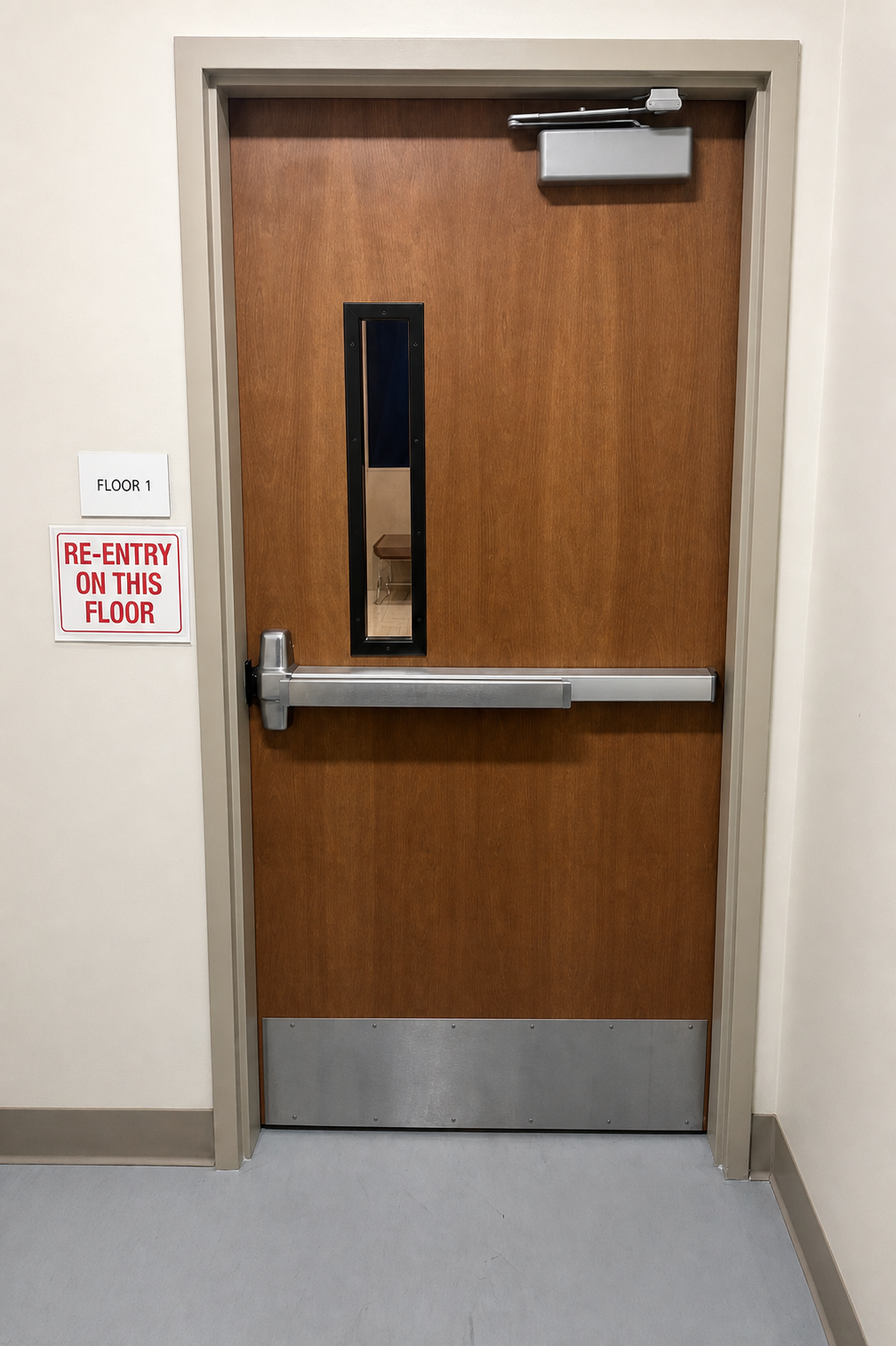
Healthcare Fire Door Deficiency Repair at a Glance
- Facility: Newly constructed, multi-story medical facility in South Florida
- Scope: Inspection, deficiency documentation, repair planning, corrective work, reinspection, and open-item tracking
- Progress: More than three-quarters of initially deficient openings corrected and retested
- Remaining work: A limited group of openings awaiting listed, manufacturer-specific materials
- Current status: Active remediation project with documented outstanding items
The Challenge: Correct the Work That Can Be Completed Without Hiding Material Delays
Healthcare fire door deficiency repair is not always a single-visit process. Some findings can be corrected through adjustment, approved repair methods, or readily available listed components. Others depend on exact manufacturer products, rated glazing, replacement doors, frame labels, fire-exit hardware, or specialty gap solutions that may have extended lead times.
The facility needed a process that accomplished two things at once: move field-correctable deficiencies forward quickly and preserve an honest, door-level record of anything that could not yet be closed.
Types of Deficiencies Addressed
The inspection and repair program included conditions such as:
- Perimeter, meeting-edge, and bottom-clearance concerns
- Self-closing and positive-latching performance
- Closer, coordinator, flush-bolt, and fire-pin adjustments
- Fire-exit hardware requiring correction or replacement
- Missing, damaged, or incomplete smoke seals
- Rated glazing and vision-panel concerns
- Protection plates requiring an appropriate rated product
- Door, frame, and field-labeling issues
- Open holes, penetrations, or field modifications requiring an approved solution
BC Fire Door’s Staged Remediation Process
1. Create a Door-by-Door Deficiency Inventory
Each finding was assigned to the affected opening with a description of the condition and the corrective action needed. This created a single source of truth for the owner, repair team, and future reinspection.
2. Separate Immediate Repairs From Material-Dependent Work
BC Fire Door grouped findings into field-adjustable work, standard listed-component repairs, and manufacturer-specific material needs. The project could then advance without losing visibility into the items that required procurement.
3. Repair and Retest Available Work
Corrective work was completed where appropriate materials and approved methods were available. Affected openings were then retested so the record reflected verified progress rather than simply showing that a work order had been opened.
4. Maintain an Open-Item Tracker
Remaining items were kept open and tied to the required material or next action. This avoided an inaccurate claim of completion and gave the facility a practical list for purchasing, scheduling, and final verification.
Progress: Most Deficient Openings Corrected and Retested
More than three-quarters of the openings that initially required corrective action have been repaired and retested. The remaining openings are not being represented as complete. They are documented as pending until the correct listed, manufacturer-specific materials arrive and final corrective work can be verified.
This distinction matters. A transparent closeout record should show what passed, what was repaired and retested, and what remains open. Waiting for the correct listed material is different from ignoring a deficiency, but the opening should remain on the active list until the work and verification are complete.
Why Long-Lead Fire Door Materials Require Careful Documentation
Rated openings depend on compatible and approved components. Replacing a delayed item with an unverified substitute can create a new compliance problem. When specialty materials are required, the safer approach is to document the finding, identify the appropriate product or approval path, track procurement, and complete a final reinspection after installation.
For facility teams, this creates a defensible record of active corrective action without overstating the current condition of the building.
What This Project Shows About New Healthcare Construction
New buildings can still require extensive fire and smoke door closeout. Multiple trades may touch an opening, hardware may need final adjustment, and product substitutions or field changes may affect the assembly. A structured healthcare fire door inspection and remediation program helps the owner separate completed work from unresolved items before surveys, occupancy milestones, or annual inspection cycles.
Frequently Asked Questions
Can a fire door deficiency remain open while a listed part is on order?
The deficiency should remain documented as open until the proper corrective work is completed and verified. The facility should retain the finding, procurement status, interim risk-management information when applicable, and final reinspection record.
Why not use a substitute part that is available sooner?
Fire door components must be appropriate for the rated assembly. An unverified substitution may affect the listing or create another deficiency. Product compatibility and the approved repair path should be confirmed before installation.
What should a healthcare fire door open-item tracker include?
It should identify the opening, deficiency, required corrective action, responsible party, material status, repair date, reinspection result, and supporting notes or photos.
Does completing most repairs mean the facility is compliant?
No. Progress should not be described as full compliance while known deficiencies remain open. Each remaining opening must be corrected and verified, and the facility must continue its ongoing inspection and maintenance program.
Healthcare Industry Engagement
BC Fire Door participates in the Florida Healthcare Engineering Association (FHEA) as a Supporting Member, helping us stay engaged with Florida’s healthcare facilities community and continuing education. FHEA membership does not constitute an endorsement of BC Fire Door’s products or services.
Related Hospital Remediation Case Study
For an example of a large corrective-work program completed on an accelerated schedule, read our New Hospital Fire Door Remediation Case Study.
Get a Clear Fire Door Remediation and Closeout Plan
BC Fire Door provides fire door inspection services, deficiency documentation, repair planning, corrective-work support, and reinspection for healthcare and commercial facilities across Florida and the Southeast.
Contact BC Fire Door to discuss a healthcare fire door inspection, active deficiency list, or construction closeout program.